Brain Health are neurological disorders and injuries, Multiple Sclerosis (MS), Parkinson, stroke, dementia, epilepsy, neuropsychiatric and psychiatric diagnoses AND mental health. Many of them are connected to our most common NCDs like cardiovascular diseases and cancer. How do we deal with the need of improved knowledge on causes, connections between diseases and not the least, what can be done?
How to decrease the stigma for people living with neurological disorders? And another thing to consider is the trust for society, the future for healthcare and its resources, will it be equitable and equal for all or will there be priorities based on..?
Programme – 16 march
Click on the headlines to see more information.
08:15 - Registration opens
Welcome to our registration desk when you arrive at ELITE Palace Hotel.
Please bring your e-mail confirmation for your participation.
You are required to wear your conference badge all day for security purposes.
09:00 - Opening address
Room: Vasasalen Language: 

Welcome to FOKUS Patient Future Days 2026!
On stage: Penilla Gunther & Mattias Hellström, FOKUS Patient & Citizens Affairs
09:10 - Keynote speaker: Jakob Forssmed, Minister of Health and Social Affairs
Room: Vasasalen
Speaker: Jakob Forssmed, Minister of Health and Social Affairs (virtual participation)
09:25 - The Stroke Revolution - Keynote speaker: Bo Norrving, Senior Professor in neurology, Dep. of Clinical Sciences, Neurology, Lund University
Room: Vasasalen Language:
Stroke Revolution – how treatments for stroke has change over the years
Speaker: Bo Norrving, Senior Professor in neurology, Dep. of Clinical Sciences, Neurology, Lund University
09:40 - Brain Health - a new area for collaboration
Room: Vasasalen Language:
Brain Health – a new area for collaboration
Approx. 3,4 billion people globally are suffering from neurological disorders whereof approx. 2 million people in Sweden. If we add addiction and other diagnoses, it ends up in almost 4 million people. It is the main reason for disabilities and a common cause of death, and now Its time to recognize Brain Health as a special area in healthcare.
The hidden crisis of society – costs and suffering for brain diagnoses.
Joakim Ramsberg, Research Director, The Swedish Brain Foundation
A National Hub for Brain Health – something for Sweden too? Experiences from Portugal.
Alexandre Guedes da Silva, President, The Portuguese Multiple Sclerosis Society.
A European collaboration about Brain Health
Nadja Fagrell Trygg, Senior Research Officer FORTE & Susanne Frykman, Senior Research Office, Swedish Research Council
Response by:
Bo Norrving, Senior Professor in neurology, Department of Clinical Sciences, Neurology, Lund University, Sweden
Carina Petersson, President, Swedish Stroke Association
Bengt-Ivar Fransson, Public Affairs Manager
Moderator: Thomas Straumits, Director, Client Executive, Business Development EY
10:40 - Coffee Break
Room: In the conference area
Coffee break with coffee or tea
11:00 - Parallel seminars
Room: Vanadissalen Language:
Support for people with neurological disorders.
Support can happen in many ways for different people. Physical, mental, social and financial support are all important for a good Qality of Life, beside access to healthcare.
The right treatment in the right time, with the right support over time
Eva-Lena Jansson, President, Swedish Parkinson Association
Digital support for young relatives to people with neurodegenerative diseases like dementia, Huntington and many more
Maria Linné, Project leader, YTAN – Young Together Against Neurodegenerative Diseases
Support for your specific diagnosis
Eva Helmersson, President, The Swedish NEURO Organisation
Physiotherapy as method to retain or to keep abilities
Cecilia Winberg, President, The Swedish Organisation for Physio Therapeutists
Utveckling av medteh inom neurologi
Lena Strömberg, VD för Medtech4Health
Moderator: Johan Järte, Senior Consultant Radiology and Medical Director Oriola
Room: Vasasalen Language:
How to decrease risks for dementia?
A lot of research is going on to reduce the risks for Alzheimer, the main cause of dementia. There are high hopes for new treatments, but at the same time not to forget the preventive measures.
Introduction by
Wilhelmina Hoffman, Principal, The Siliviahemmet Foundation and Direktor, Swedish Dementia Centre, Stockholm. Dementia Education and Care for Quality of Life. Silviahemmet’s work to spread knowledge about dementia care was initiated by HM Queen Silvia. Swedish Dementia Centre is the national centre for excellence in the field of dementia.
Panel discussion with:
Elisabeth Dupont, Regional Manager, World Diabetes Federation Europe
Sophie Millar, EU Policy and Advocacy Manager, European Society of Cardiology
Sven Jonsson, President, The Swedish Kidney Organisation Stockholm Gotland, Sweden
Moderator: Anders Blanck, Senior Advisor, Life Science & Healthcare
11:50 - Lunch
Room: Restaurant
Lunch
12:30 - Parallel seminars
Room: Vasasalen Language:
Connected diseases – neurological disorders and NCDs.
With an ageing population, co-morbidities are increasing and getting more visible. Treatments must concentrate at not only one condition, but several.
Precision medicine in the brain-heart axis: past, present and future.
Dr Yvan Devaux, Luxemburg, Head of the Cardiovascular Research Unit at Luxembourg Institute of Health
Difficulties for people with psychiatric condtions and NCDs
Åsa Konradsson Geuken, Lecturer, Uppsala University, Sweden. President, The Schizophrenic Patients Organisation
Panel discussion with:
Anders Åkesson, President, The Swedish Heart-Lung Patient Organisation
Marit Jenset, Secretary General, Swedish Breast Cancer Organisation
Eduardo Pisani, CEO, All.Can International
Thomas Magnusson, President, Diabetes Sweden
Moderator: Penilla Gunther, Founder FOKUS Patient
Room: Vanadissalen Language:
Dementia – a diagnosis not only affecting old people.
Dementia – a diagnosis not only affecting old people. Sweden has a new National Dementia Strategy “Every day counts”. The strategy focus on strengthening healthcare and daily care for people with dementia. Early detection must be key for getting the best support also for families. Good examples will be shared and discussed.
An initial assessment and support for further investigation of cognitive impairments
Simon Körösi, Founder and Medical Doctor at Geras Solutions, a virtual Medical Memory Reception
How can a patient organisation drive opinion externally and at the same time give support to the members?
Lena Kock, President, The Swedish Association for Dementia
Every day counts – what patients and family members are saying about their needs
Maria Cavalli, Founder of NADIO, digital services for carers
The project Families in the middle of life – more and more is affected by dementia in middle age
Liselotte Jansson, Secretary General, The Alzheimer Foundation, Sweden
Moderator: Elisabeth Ericson, Senior Communications Advisor
13:20 - Break
Break
13:40 - Parallel seminars
Room: VasasalenLanguage:
How virus, other diseases and accidents can cause neurological disorders.
Brain injuries through accidents, infections and virus, can contribute to a lot of neurological conditions but also other connected diseases.
Introdutionary presentation by
How shingles and herpes can contrbute to increased risks for neurological condistions
Hugo Lövheim, Professor at the Instirtution for Community Medicine and Rehab, Umeå University, Sweden
Is infectious mononucleosis causing Multiple Sclerosis?
Hans Grönlund, Assistant Professor of immunology, Karolinska Institute
Response from
Anna Barsk Holmbom, President of Hjärnkraft, the Swedish Association for Acquired Brain Damage
Janna Strandli, President, The Lyme disease and TBE Organisation in Sweden
Amanda Rydén, President, Young Diabetes
Moderator: Anders Blanck, Senior Advisor, Life Science & Healthcare
Room: Vanadissalen Language:
How does the rumor of authorities and agencies affect the publics’ trust?
How does the rumor of authorities and agencies affect the publics’ trust? If there is a positive reputation, there is also a trust for what they are telling the public. Their advices will be listened to, not questioned. In this annual survey, 50 of the Swedish authorities/agencies are followed, where in this presentation the focus is on healthcare.
Presentations by:
Johan Orbe, Senior analyst, Verian Group
Erik Lundbom, Senior analyst, Verian Group
Response: from the audience.
Moderator: Elisabeth Ericson, Senior Communications Advisor
14:30 - Break
Break
14:40 - 1.4 million people in Sweden are affected by migraine. How does it affect the society and the patients?
Room: VasasalenLanguage:
1,4 miljon people in Sweden are affected by migraine. How does it affect the society and the patients?
Migraine is a neurological endemic disease with recurrent seizures of severe, pulsating headache with nausea and with a sensitivity for light and sound. It gives a significant impact on life and society when unpredictable attacks affect and hinders family life, social activities, school and work.
The endemic disease migraine and its affect on society
Presentation of HUVUDSAKEN, a collaboration project between The Swedish Headache Society and several companies with the aim to improve healthcare and to support the development of better functioning care chains for people with migraine- and headache diseases.
Lars Edvinsson, Professor of Internal Medicine and Emergency Medicine, Lund University, Sweden and Professor in Receptor Regulation Cerebrovascular and Cardiovascular Diseases, Copenhagen University, Danmark.
Panel discussion about investments in healthcare on migraine
Johan Loock, President, The Swedish Headache Organisation
Desiree Pethrus, Former Member of Swedish Parliament, former Regional Counsellor, Region Stockholm
Ann-Sofie Andersson-Ward, Patient Access & Growth Lead CNS Sweden, Teva (One of the companies within the project Huvudsaken, where the others are AbbVie, Lundbeck, Novartis, Organon och Pfizer)
Moderator: Petra Eurenius, Senior Advisor, Life Science
15:30 - Coffee Break
Room: In the conference area
Coffee break with coffee or tea.
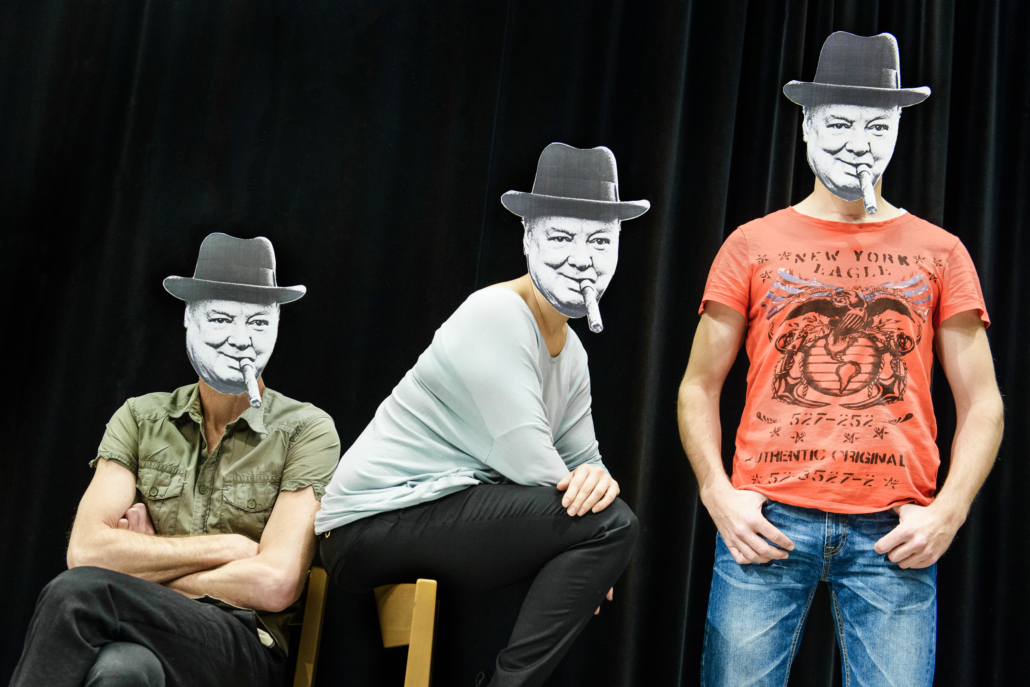
15:50 - "Churchill was also out of his mind…"
Room: Vasasalen
A short insight about people living with NPD when trying to get a job…
Performance by:
Östra Teatern, Stockholm.
16:10 - Panel discussion: The future for healthcare, Non-Communicable diseases and Brain Health
Room: Vasasalen Language:
The future for healthcare, Non-Communicable diseases and Brain Health
With an ageing population, comorbidities, lack of work force etc, how to work together over organisational boarders?
Keynote speech as introduction to the following discussion by:
Antonio Parenti, Director DG SANTE B – Public health, Cancer and Health security, European Commission.
Panel discussion:
Daniel Akenine, National Technology Officer, Microsoft Sweden. Earlier resarecher in Computational Neuroscience.
Elisabetta Zanon, CEO, European Cancer Organisation.
Liselotte Jansson, Secretary General, Alzheimer Foundation, Sweden
Jessica Martinsson, CEO, SwedenBio – The Swedish Organisation for Life Science
Moderator: Penilla Gunther, Founder FOKUS Patient & Thomas Straumits, Director, Client Executive, Business Developm. EY
17:00 - Closing remarks & The End
Room: Vasasalen
Closing remarks & The End
18:00 - FOKUS Patient Networking Event - with Eurovision theme!
Room: Bar Aperitivo, 1st floor
WELCOME to FOKUS Patient® Networking Event 2026!
All guests registered for the conferences and the Networking Event are welcome to join us for some food, drinks and music at the second floor of the Elite Palace Hotel, The Bar Aperitivo.
Have you forgotten to register? Talk to Penilla Gunther if there are any seats left.